


Tencent Hunyuan AI Video
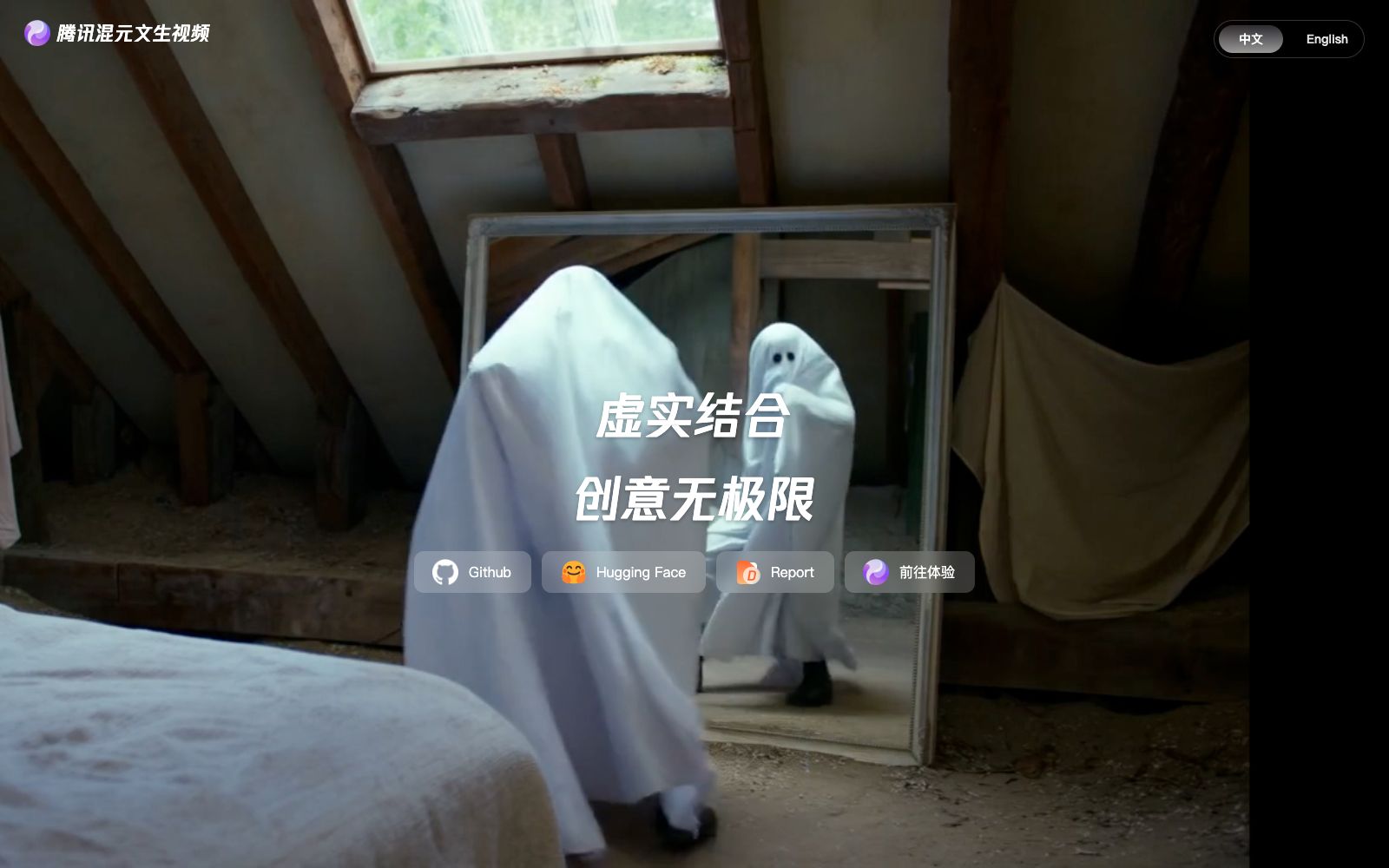
Tencent Hunyuan has launched a text-to-video capability. Officially, its open-source video models rank among the top in terms of parameter scale and performance. It supports text-to-video generation, native shot cutting and continuous actions, and also provides voice-driven digital human images and automatic dubbing capabilities.
Updated: 2026-10-26
What is Tencent Hunyuan AI Video?
Tencent Hunyuan AI Video is a collection of video-oriented capabilities under the Tencent Hunyuan system. The official website focuses on introducing text-to-video models and voice-driven digital human capabilities. The official claims that this model is the text-to-video large model with the most parameters and the strongest performance among current open-source models, and it emphasizes physical accuracy and shot consistency. In addition to pure generation, the platform also provides lip shape and expression driving capabilities, which can be used for the production of digital human broadcast videos, generating images and voices together.
Who is it for?
- Short video and advertising creators: They need to quickly generate shot materials for storyboard verification, creative proposals, and delivery testing.
- Pre-production teams for film and animation: Use generated clips to evaluate shot language and narrative rhythm, reducing the time and cost of trial and error in the early stages.
- Digital human content operators: They need lip-sync and expression-driven lip-sync videos for the stable update of account content.
- Technical teams and researchers: Focus on the parameter scale, generation quality and reproducibility of open-source video models for selection research.
Key features
6Text-to-Video Generation
The official states that the model can generate videos with strong physical accuracy and consistent shots, and can freely switch between realistic and virtual styles.
Native Shot Transition Capability
The official states that it supports naturally connected scene switching, enabling multi-shot storytelling in a single generation, which reduces the workload of post-production splicing and audio-video synchronization.
Continuous Actions and Camera Movement
The official claims that it can complete multiple continuous actions in one go, with director-level camera movement capabilities, enabling seamless transitions between artistic shots.
Physical Compliance and Concept Generalization
The official claims that the generated movements conform to the laws of physics, while also supporting the free combination of different concepts to expand the space for creative expression.
Chinese Style and Oriental Aesthetics
The official showcases style examples such as Dunhuang sculptures and Chinese style, indicating targeted optimizations for the generation of Oriental cultural themes.
Voice and Expression-Driven
Provides voice-driven, motion and expression-driven capabilities. The official states that it can accurately follow complex postures while maintaining consistent character identities, and also supports end-to-end automatic dubbing.
How to use Tencent Hunyuan AI Video
- Clearly specify the shot type, action sequence, and lighting atmosphere in the prompt.
- Official examples show that such descriptions can significantly improve the generation effect.
- For content involving the generation of character images or portraits, confirm authorization before public dissemination and commercial use to avoid risks related to portrait rights and copyright.
- When the generated content is used for commercial purposes, please refer to the platform's and the model's license terms.
- an open-source license does not mean commercial use is permitted unconditionally.
- Video generation has high computational costs.
- It is recommended to first verify the direction of prompt words with short clips before investing in longer generation tasks.
- The mainstream working mode of AI video generation is still "short clips + post-editing and splicing": the duration of a single generated video is limited.
- For complex narratives, it is recommended to split them into multiple clips for generation according to the storyboard, and then unify the rhythm and soundtrack with video editing software.
Traffic & popularity
Data month Sep 2026
Tencent Hunyuan AI Video receives about 29.3K visits per month.
Monthly visits
12 monthsEstimated from third-party traffic data.
Similar tools
 VchitectShusheng DreamBuilder (Vchitect) is a video generation model launched by the Shanghai AI Laboratory. The official statement says that Vchitect 2.0 supports generation of videos from 5 to 20 seconds, flexible aspect ratios, and super-resolution frame interpolation, and also has the capability of generating videos from images.
 SkyReelsSkyReels is an AI video generation platform launched by Kunlun Tech. Centered on storytelling narrative, it provides capabilities such as text-to-video, image-to-video, and multimodal reference-to-video. According to the official statement, it can generate both video and audio simultaneously, and supports character consistency and plot continuity across storyboards.
 GenmoGenmo is a research-driven open-source video generation lab. With the Mochi text-to-video model and open-world models, it enables users to create high-quality videos locally or in the playground.
 iFlytek Intelligent CreationiFlytek's one-stop AI dubbing and digital human platform offers super realistic text-to-speech, cartoon digital human videos and images, and voice customization. Officially, it covers scenarios such as education and training, news media, and corporate marketing, serving over ten million creators.
 ToMovieeToMoviee is an AI content creation platform launched by Wondershare Technology. Officially, it claims that videos, images and music can be generated with one sentence. It covers modules such as text-to-video, image-to-video, video continuation, text-to-music and text-to-speech, and supports precise control of shots and emotions.
 Luma AILuma AI is a creative AI platform. Its Ray and Uni series video models support text-to-video and image-to-video generation. Ray 3.2 emphasizes director-level camera control frame by frame and provides creative agents to handle end-to-end creation workflows.