


Perplexity
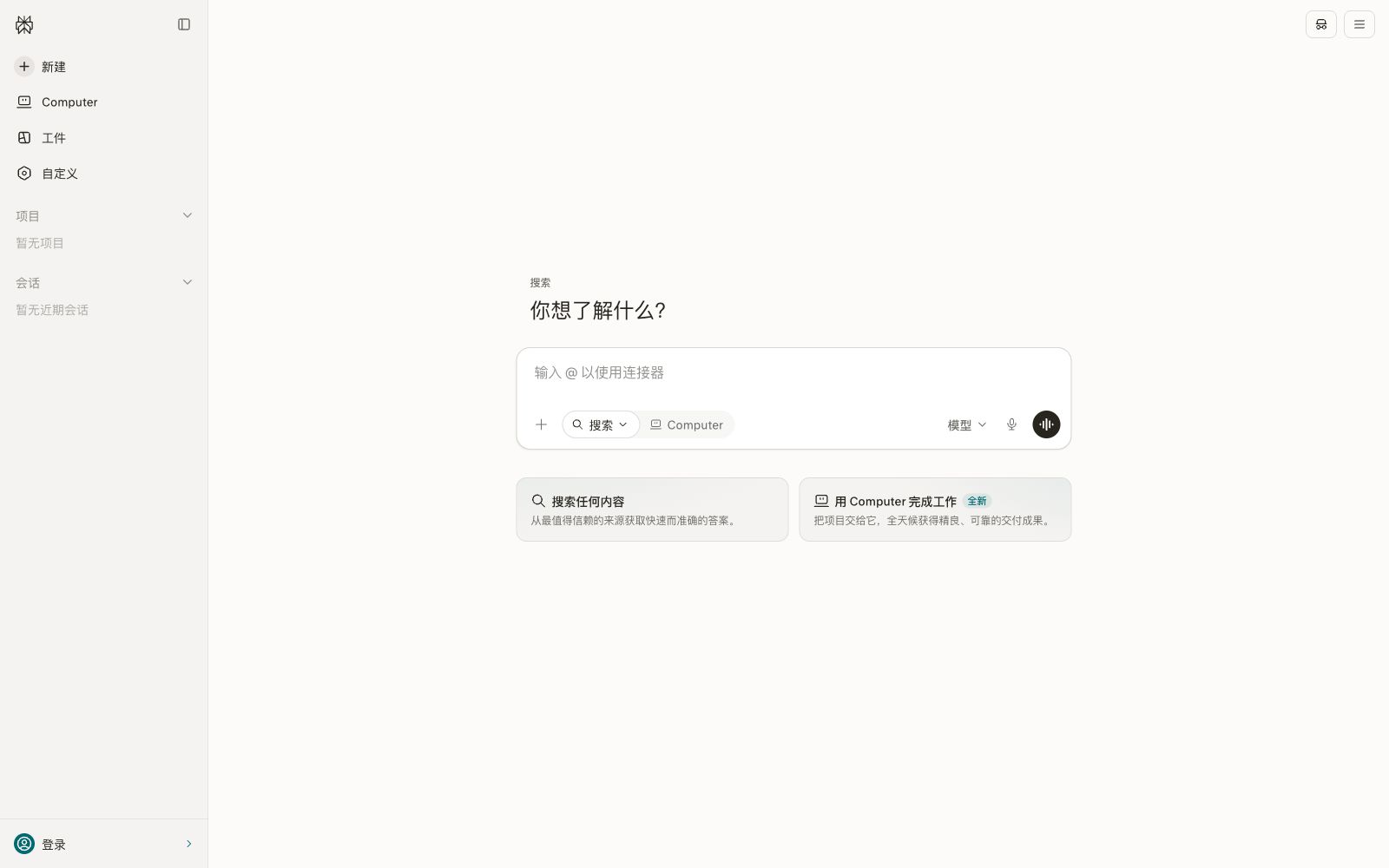
AI answer search engine: You can get conclusions with cited sources by asking questions in natural language. It supports follow-up questions, multiple retrieval modes and document upload-based Q&A, making it suitable for retrieval scenarios that require checking while searching.
Updated: 2026-10-26
What is Perplexity?
Perplexity is an AI answer search engine that combines traditional retrieval with large model responses: you ask a natural language question, it retrieves from multiple sources and then provides conclusions, and it cites the sources in the answers. Compared to pure conversational assistants, it is more positioned as "finding facts and materials", allowing users to not only get answers but also verify them one by one through the sources, balancing efficiency and verifiability. It is suitable for users who use search as a research tool rather than a chatting tool. It is not just a search box, but more like a "researcher who can retrieve": it looks up information for you, summarizes viewpoints, and places the chain of evidence next to the answers.
Who is it for?
- Researchers, consultants, media practitioners and content creators who need to frequently look up information and verify sources; ordinary users who use it as a substitute for daily searches; and learners who need to quickly research an unfamiliar field without being led astray by a single source of information can all benefit from integrating Perplexity into their workflows. It can also significantly speed up work that requires a large input of information, such as market research, competitive analysis, and topic planning.
Key features
6Answer-based Retrieval
Directly provides answers with conclusions instead of a list of blue links, reducing the round-trip cost of "opening-filtering-judging" and is suitable for quickly grasping the outline of a topic.
Cited Sources
The answer is accompanied by annotations of the sources, making it easy to verify facts and viewpoints one by one. This is the core difference between it and ordinary chat assistants, and also the source of verifiability.
follow-up questionsstyle search
You can keep asking follow-up questions on the same topic to gradually narrow it down or expand it, turning a single search into a complete research chain. For example, you can first ask about the background, then about the data, and finally about the controversial points, and make progress step by step to get structured conclusions.
Multiple Retrieval Modes
The official platform offers retrieval methods with varying depths and scopes, catering to diverse needs from quick Q&A to in-depth research, allowing users to choose the appropriate mode based on the task's complexity.
Files and Personal Knowledge Sources
It can perform retrieval-based Q&A on uploaded documents, incorporating private materials into the search scope, making it suitable for long-text scenarios such as papers, reports, and contracts.
Pro Search
The paid version offers more in-depth search capabilities and a more powerful model, making it suitable for users with high-frequency and in-depth usage needs.
How to use Perplexity
- Breaking down complex questions into multiple smaller ones and asking them step by step makes it easier to get reliable answers than asking one huge question at a time.
- When making decisions based on conclusions, be sure to go back to the original sources for cross-verification, and pay attention to the timestamps in the responses to avoid citing outdated data.
- For daily research, you can use it alongside conventional search engines, leveraging the strengths of each.
- Using "follow-up questions" instead of frequently starting new sessions will make the answers more coherent and help turn them into a complete set of materials more easily.
Things to know
Traffic & popularity
Data month Sep 2026
Perplexity receives about 107.4M visits per month and ranks #396 worldwide.
Monthly visits
12 monthsTraffic sources
- Direct71.6%
- Search17.8%
- Social3.2%
- Referrals2.9%
- AI assistants2.3%
- Other2.1%
Top countries
- United States25.1%
- India8.2%
- Germany5.5%
- Russia4.8%
- France4.3%
Estimated from third-party traffic data.
In these collections
Similar tools
 KomoAI search engine that retrieves web pages after a query and provides answers with sources. It offers three modes: Web Search, Find People, and In-depth Research. Among them, Firsthand is specifically designed to find real people who can answer questions that AI cannot, and search results can trace back to history.
 MetasoAd-free Chinese AI search engine that directly outputs answers with sources, supports switching between the entire internet, academic and library scopes, and provides in-depth research, file upload Q&A and voice input.
 ExaA search API for AI agents that provides real-time web data, deep research, and structured content through a single endpoint, with highlighted, token-efficient results for Q&A, research, and coding agents.
 FlowFlow is an AI knowledge assistant that can answer questions in real time with internet access, summarize long articles and web pages, and assist in writing documents. It covers a wide range of knowledge needs from life encyclopedias to professional academics, helping you quickly enter a state of flow.
 LinerAn AI search and research tool for professionals, providing answers with cited sources, academic paper retrieval and comparison, and literature reviews. It supports searching, writing, and editing in the same window.
 ChatPDFAn AI Q&A tool designed specifically for PDFs. Upload a PDF to get a summary instantly. You can ask questions and get page number citations. It supports chatting with multiple files simultaneously and any language. You can also interact with files, videos, and websites. It comes with supporting AI writing and detection tools.